

DR AMOAH
ANNANDALE, Virginia — On a quiet stretch of Little River Turnpike, far from the marble halls of Washington, a small clinic is quietly rewriting what primary care can be in the United States. Inside Virginia Internal Medicine PC stands the man who built it for anyone who needs help —whether they can pay or not.
His name is Dr. Nana Osei Amoah,and his story begins under lantern light in the Ashanti Region of Ghana. Dr. Amoah grew up at the side of his grandmother and great-grandmother, both respected traditional birth at He carried their bags on village rounds, warmed water, held new razor blades for clean cord-cutting, and watched newborns take their first breath.
Those early lessons taught him that prevention saves lives, that money should never decide who receives care,and that a healer must show up even when tired or nappreciated. These principles became the foundation of his life. His academicjourney bears the same imprint. After secondary school at Osei Kyeretwie Senior High School (OKESS) and Obuasi Secondary Technical School, he completed national service teaching cemistry, physics, and biology by day while still assisting with deliveries at night.
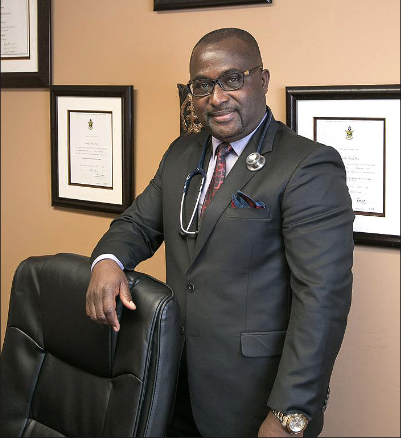
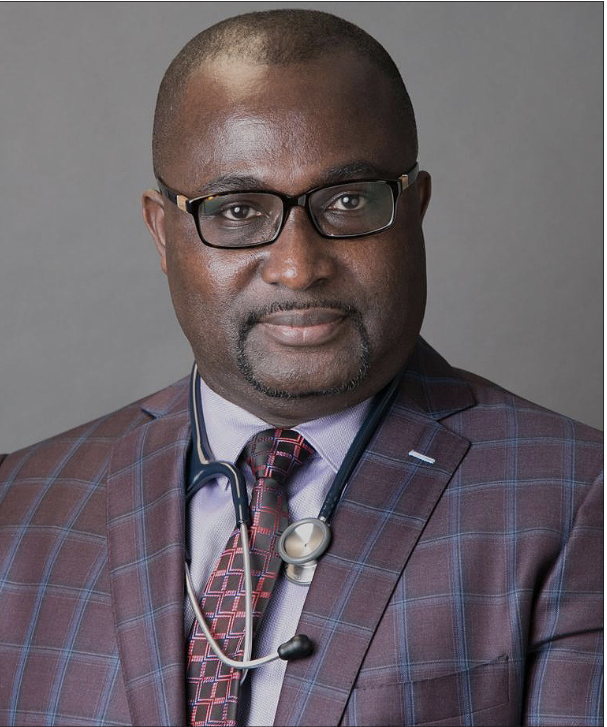
In 1991, he earned one of only thirty spots at Kwame Nkrumah University of Science and Technology School of Medical Sciences. He graduated with an MBChB in 1996, completed an externship in the United Kingdom, and returned to Ghana to serve at Komfo Anokye Teaching Hospital and Ashanti Goldfields Hospital. One moment from that period still fuels him. He watched a child die in an emergency room because staff demanded payment before treatment. When a colleague lied about the incident at the morbidity and mortality meeting, Dr Amoah spoke up. Some never forgave him, but he says silence would have coat him more. He later moved to the United States, completed a general surgery internship et Howard University Hospital, followed by an internal medic’esidency at Woodhull Medical Center (NYU Langone) from 2005 to 2008. He became board-certified by the American Board of Internal Medicine and opened his clinic in Annandale that sameyear —2008. From day one, he followed one unbreakable rule: no patient would ever be refused care bemuse of inability to pay. That rule has held for over sixteen years. Virginia Internal Medicine PC now serves a richly diverse cross- section of Northern Virginia: Ghanaian security guards, Liberian taxi drivers, Afghan interpreters, Salvadoran construction workers, and American retirees.
Some carry insurance cards. Some carry none. All are seen. Same-day appointments are the norm, telehealth is available, and the doctor speaks to patients in English, Twi, and Spanish. The practice accepts Medicare, Medicaid, and all major private insurances.It is affiliated with the not-for-profit Inova Health System, enabling him to arrange charity care and direct hospital admissions when needed.
In recent years, Dr. Amoah has become widely known for something else: an affordable, medically supervised weight-loss program that is changing lives across Virginia, Maryland, and D.C.While large telehealth companies charge over $1,000 a month for GLP-1 medications like semaglutide and tirzepatide, his patients pay only $250–$350 per month.
He built a network of FDA-registered 503B compounding pharmacies, manufacturer assistance programs, and 340B pricing to keep costs low. Patients receive weekly monitoring and direct physician oversight.
Outcomes are remarkable: an internal audit of 180 patients over 18 months showed an average total body weight loss of 19%, with diabetic remission in more than half of those who started with type 2 diabetes.The stories pour in. A Ghanaian security guarddroppedfrom298 lbs to 199 lbs and now dances highlife again. A woman flown in from Kumasi returned home walking steadily after heart-failure treatment. A Liberian taxi driver received a life-saving stent at no cost after Dr. Amoah arranged full charity care. An Afghan woman saw hermenstrual cycles return after years of absence and thanked him in Dari.
To Dr. Amoah, these victories are simply the continuation of what began in a village courtyard decades ago: showupearly,actbefore problems grow, treat people like family, and charge later — or never. He believes preventive care is still the strongest medicine we have, and he honors his grandmother every time a patient walks out healthier than they walked in.
Outside the clinic, he is a husband, father of three, and volunteer field-hockey coach. In a healthcare landscape obsessed with scale, subscriptions, and corporate valuations, Dr. Nana Osei Amoah stands as a living reminder that primary care can still be personal, accessible, and rooted in simple humanity.He carried those values from the red soil of Ashanti to Northern Virginia. The results speak for themselves.
